
Exhibition and Stories in the Cityscape
An exhibition in the inner courtyard of the Museo Casorella, housed in the festival’s former projection booth on Piazza Grande and a city tour feature filmed interviews and archive photographs.

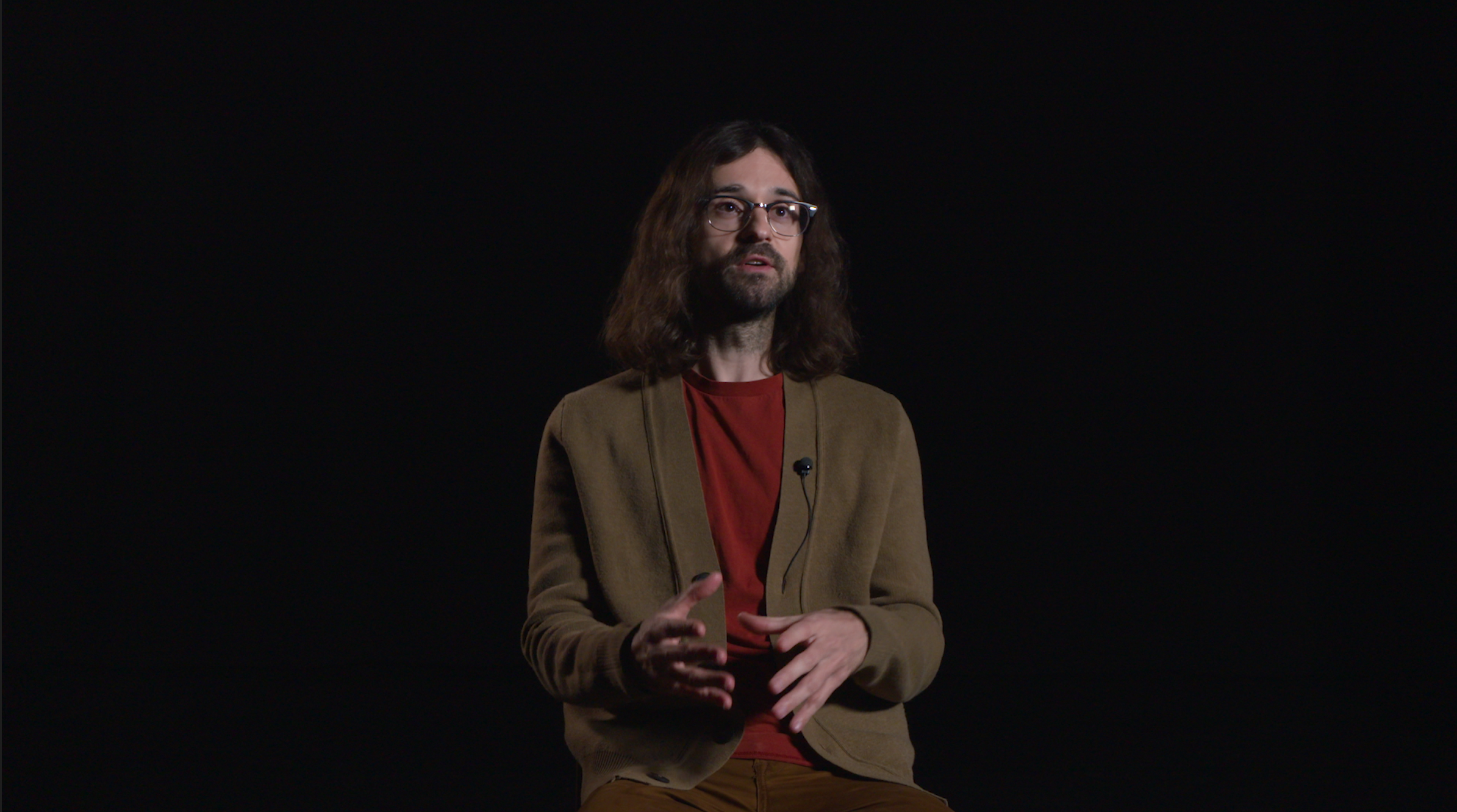
In a short clip, the piazza nostra team shares its thoughts on the project.
The story of the Locarno Film Festival has been told many times before. However, among all the commemorative works, official publications, reports and documentaries, the people who have helped to “make” the festival alongside the projectionists are still very few and far between. Despite the existence of a wealth of archives dating back to the beginnings of the festival in 1946, many of the people who work behind the scenes have remained invisible, and their contribution has therefore escaped the attention of historians and journalists. piazza nostra shines a light on experiences that have previously been unknown to the general public: stories from former staff, local residents and festival-goers. Through this project their voices can be heard and their stories will shed new light on the history of the Locarno Film Festival. This allows us to go beyond mere appearances and look beyond the official image of an international event.
The story of the festival differs depending on the perspective of the person telling it. In an oral history approach, witnesses look back at their journey, look deep into their own memories and reconstruct their stories, each from their own unique perspective. During their conversations with the piazza nostra team, they have contributed their memories, both recent and from much longer ago. In other words, each individual gives us not the truth, but a truth, one that belongs to them and is built on their own memories at a specific point in time. These interviews are allowing us to gain a fuller understanding of the past. For the piazza nostra project, these contributions are of historical interest not despite their subjective nature but because of it.
The testimonies that have been gathered are extremely diverse. However, they do not claim to be comprehensive, and they do not represent all those who have “made” Locarno. Apart from the limited resources and time available to the project, this can be explained by the fact that the sample was created simply through meetings, and in some cases at random. Some people were contacted in person, while others heard about it by word of mouth. Some of the volunteers were unable to take part because of health issues or other commitments, while others simply declined the invitation. Nevertheless, this corpus of 50 testimonies, summarized in seven clips, still allows us to paint a sweeping panorama of how a festival comes into being.
How do you summarise 100 hours of video footage into seven clips of about twenty minutes each? How can we use these testimonies to improve our understanding of the history of the Locarno Film Festival? From August 2024 to November 2025, the piazza nostra team interviewed 50 people, each with their own story and a different point of view. What they had in common was that they had all participated in the Locarno Film Festival in one way or another over the past 60 years.
The aim of this research was to uncover hidden facets of the festival’s history: the work done behind the scenes, its impact on people’s lives, how it influences the collective cultural dynamics of the area and its significance for the Locarno region. The interviews were conducted in a semi-directive manner. The participants were asked about their personal journey, their links to the festival and the changes they have noticed over the years. Space was also provided for the participants’ anecdotes, feelings and thoughts.
The content from these 100 hours of interviews has been transcribed. After a meticulous review, the project team then developed a dozen narrative lines that were then used to group together the conversations and the stories people told. The seven clips presented here are the result of that systematic work. The full interviews will be archived at the Cinémathèque suisse until the end of 2026 so that they are accessible for researchers and the public.
To the collection of stories An exhibition in the inner courtyard of the Museo Casorella, housed in the festival’s former projection booth on Piazza Grande and a city tour feature filmed interviews and archive photographs.

All recordings will be archived in the Cinémathèque suisse in Lausanne after the end of the project. This ensures that the memories collected are preserved for future generations and remain accessible to the public.

To stay informed about piazza nostra, follow the project on Instagram (@piazzanostra) or sign up for the newsletter.

piazza nostra was present at the Locarno Film Festival 2025 with a small exhibition at the Teatro Paravento.